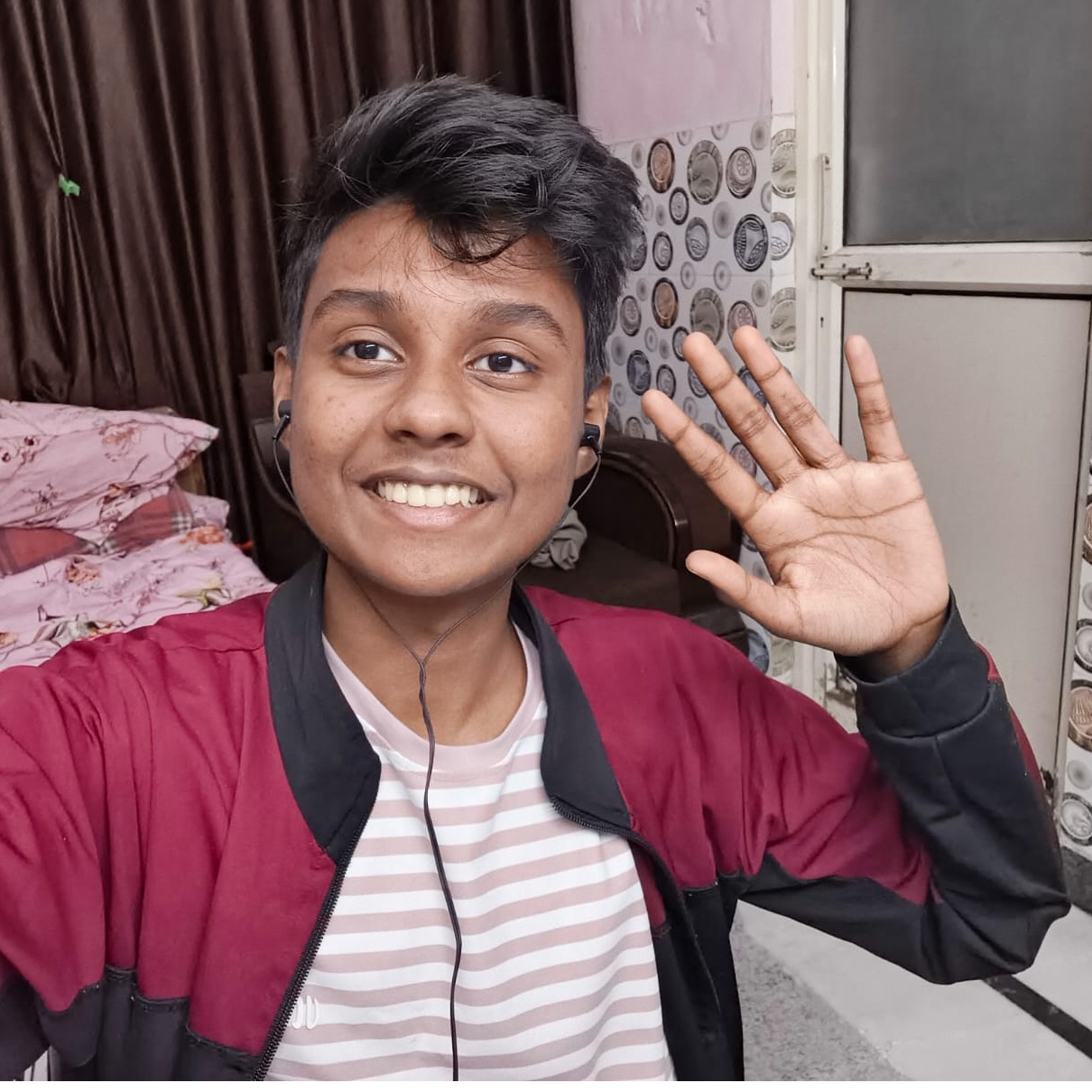
Zero to Job
Published in Amazon, 2026
My First Book: Zero To Job
(and honestly, it wasn’t easy at all)
Writing your first book sounds cool when you say it out loud.
Actually doing it? Yeah… that’s a different story.
This blog is about my first book “Zero To Job” — how it started, why I wrote it, and the chaos behind getting it published.
No flex. Just facts.
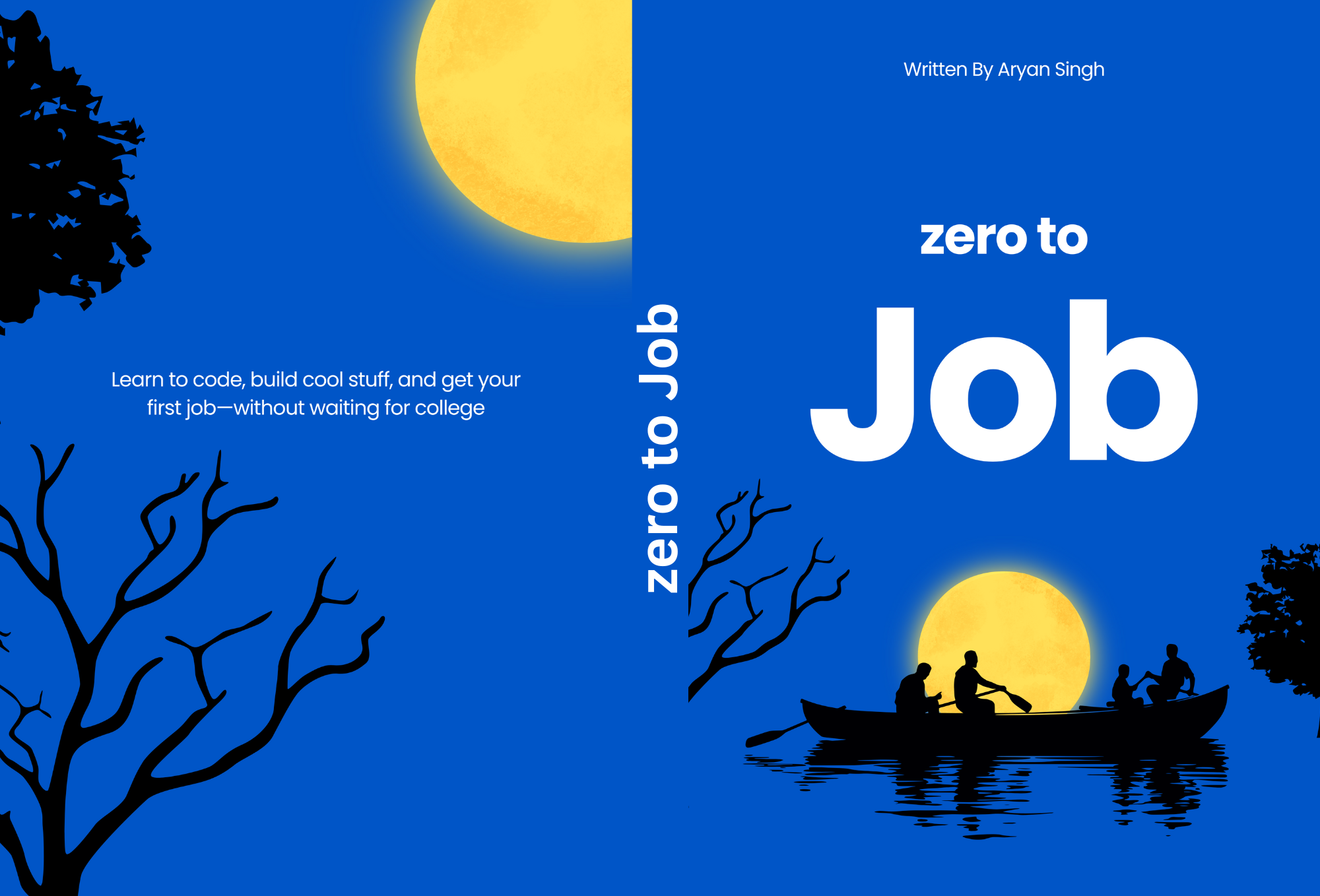
Image 1: The Book Cover
This is the cover of my very first book.
Seeing your idea turn into an actual printed cover hits different.
How this book even started
I’ve been around tech, programming, and CS stuff for a while now, and one thing kept bugging me:
Most teens (13–18) don’t even know what Computer Science really has.
Everyone hears:
- “Coding karni hai”
- “Engineer banna hai”
- “College ke baad job”
But branches of CS?
Web, mobile, systems, AI, security, open source, DevOps, product, research — half of these words are unknown to most students.
So before teaching how to code, I wanted to answer:
“What are all the possible paths in CS?”
That became the core moto of this book.
Zero se job tak — literally
This book is for someone who is at absolute zero.
No:
- fancy laptop
- paid courses
- college degree
- “10 saal ka experience”
Just curiosity and willingness to try.
I wrote this book as a step-by-step guide:
- how to start programming from scratch
- how to build real projects (not tutorial copy-paste)
- how to use GitHub and LinkedIn properly
- how to enter open source
- how to make yourself visible online
- and yes, how to get real work, internships, freelance gigs, or even a job — before college
Not theory. Not motivation quotes.
Just practical direction.
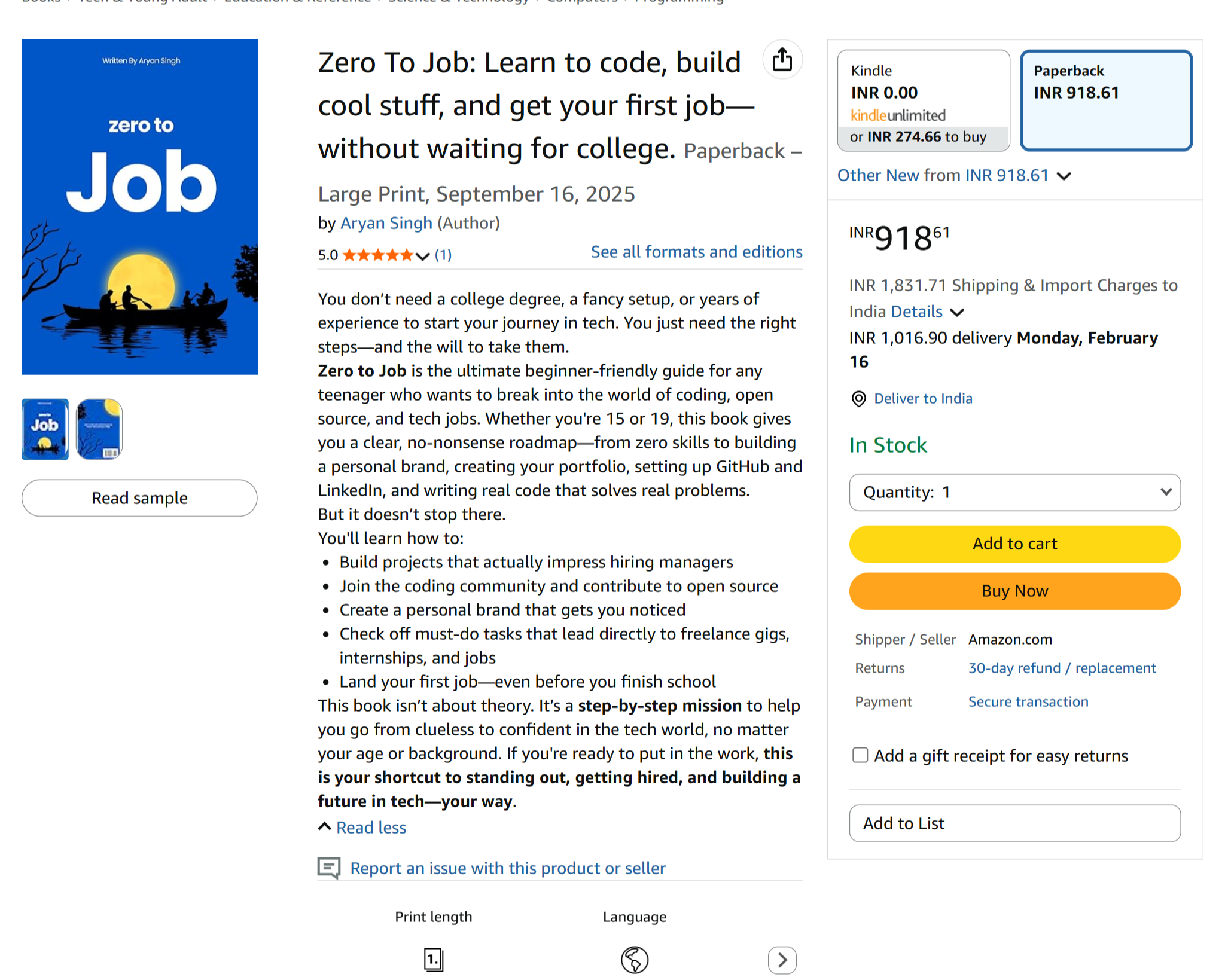
Image 2: The Amazon Product Page
Seeing your book live on Amazon feels unreal.
From an idea in your head to an actual product page.
The hardest part? Publishing & formatting
Writing the content was hard, sure.
But the real pain?
- Book formatting
- Publisher discussions
- Rejections
- Confusion about rights
- Print quality
- ISBN, layouts, margins (why are there so many rules?)
I talked to a lot of publishers.
Got ignored by some.
Got confusing replies from others.
Finally, it worked out.
Image 3: My Author Page (with the book)
This is my author page where the book officially lives.
Feels weird and cool at the same time.
The book is officially published
The book is now:
- Available in India via Pothi
- Internationally available on Amazon
- Paperback (Large Print)
And yes — holding your own printed book for the first time feels unreal.
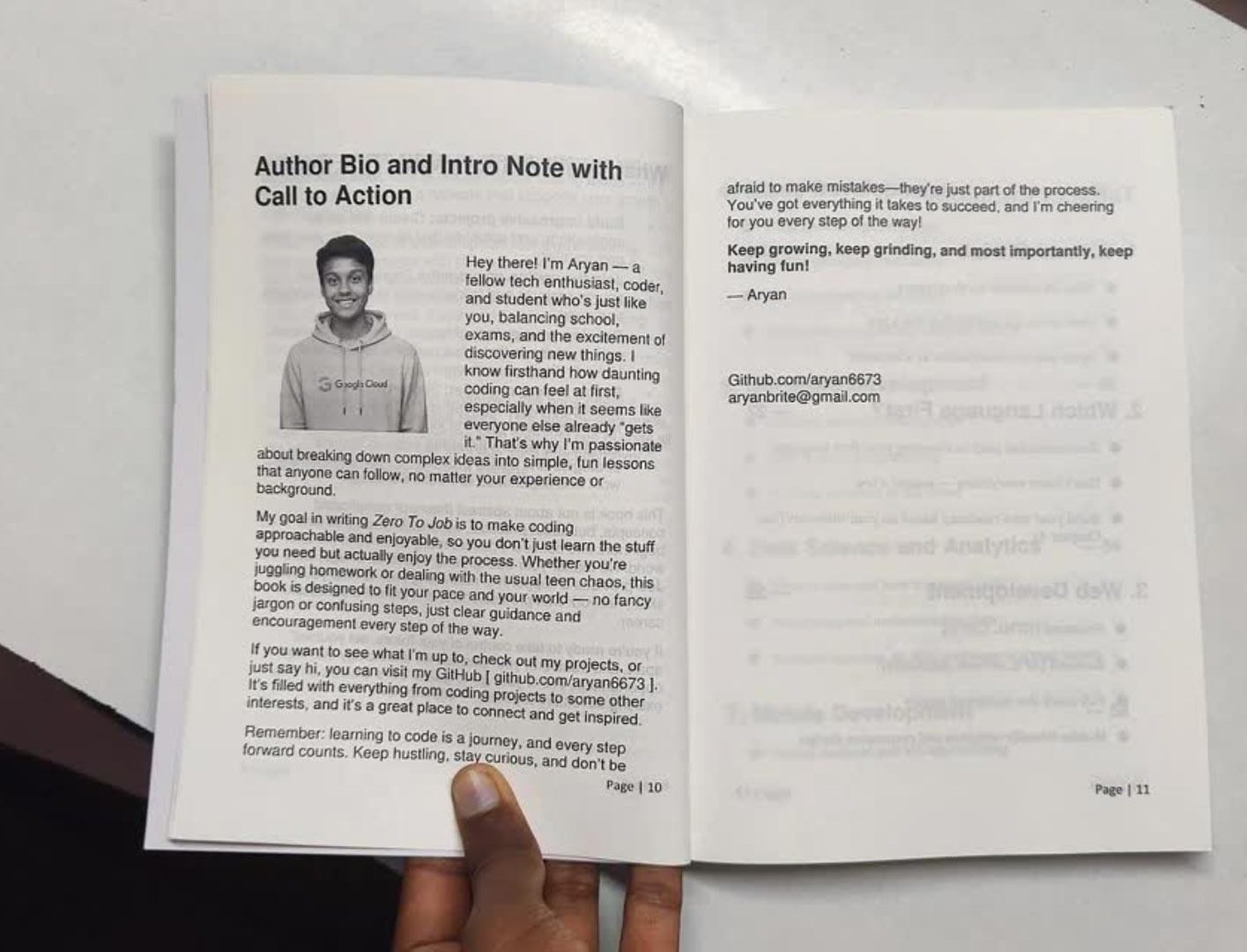
Image 4: A Page from the Book (Quantum Computing)
One thing I really wanted to do in this book was show how wide CS actually is.
Most teens don’t even know fields like Quantum Computing exist — let alone that they can explore them early.
This page is from the book where I talk about quantum computing as a possible CS path.
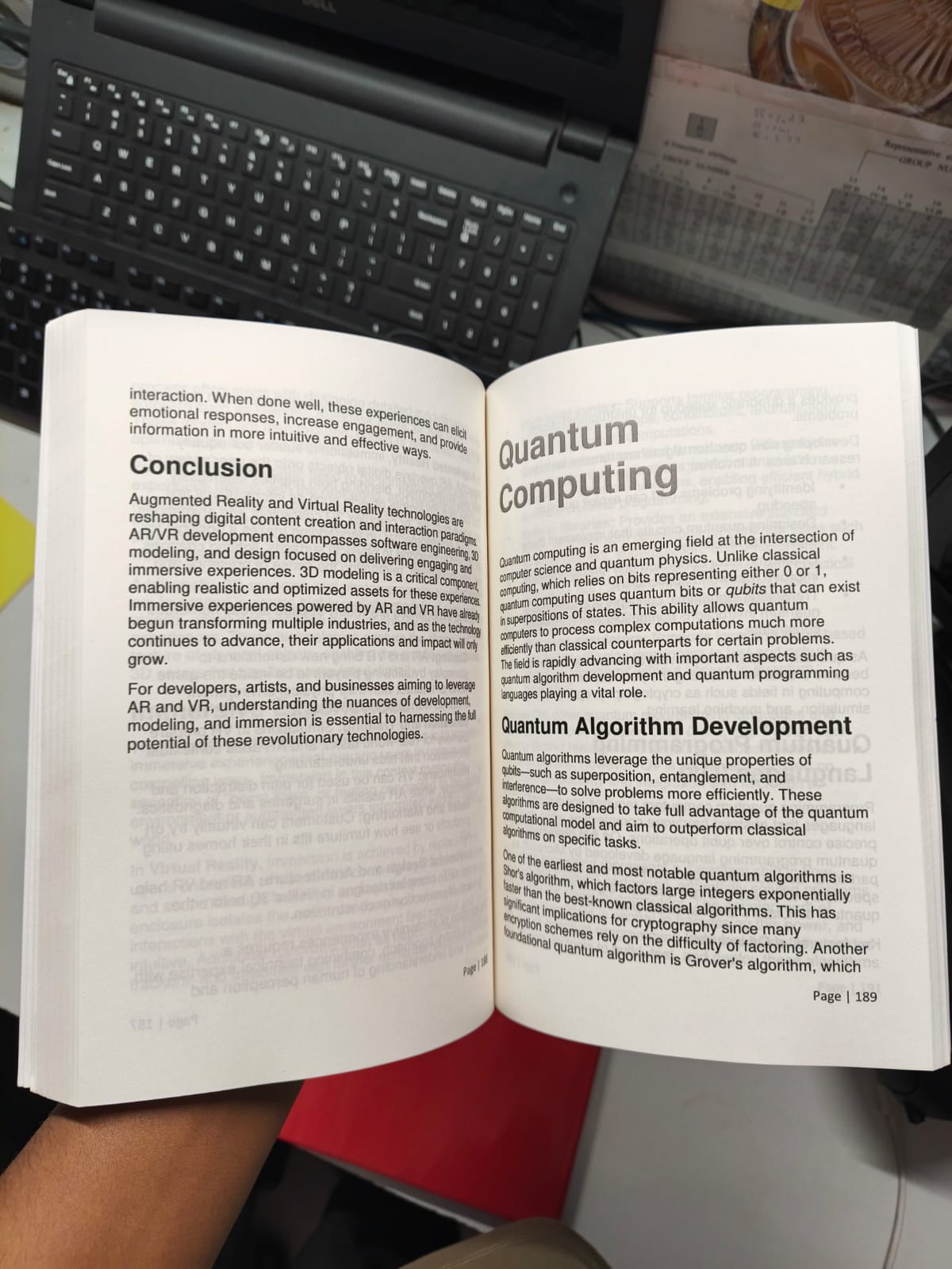
Image 5: The Physical Book in Hand
This is the moment when it actually felt real.
Not a PDF. Not a draft. A real book.
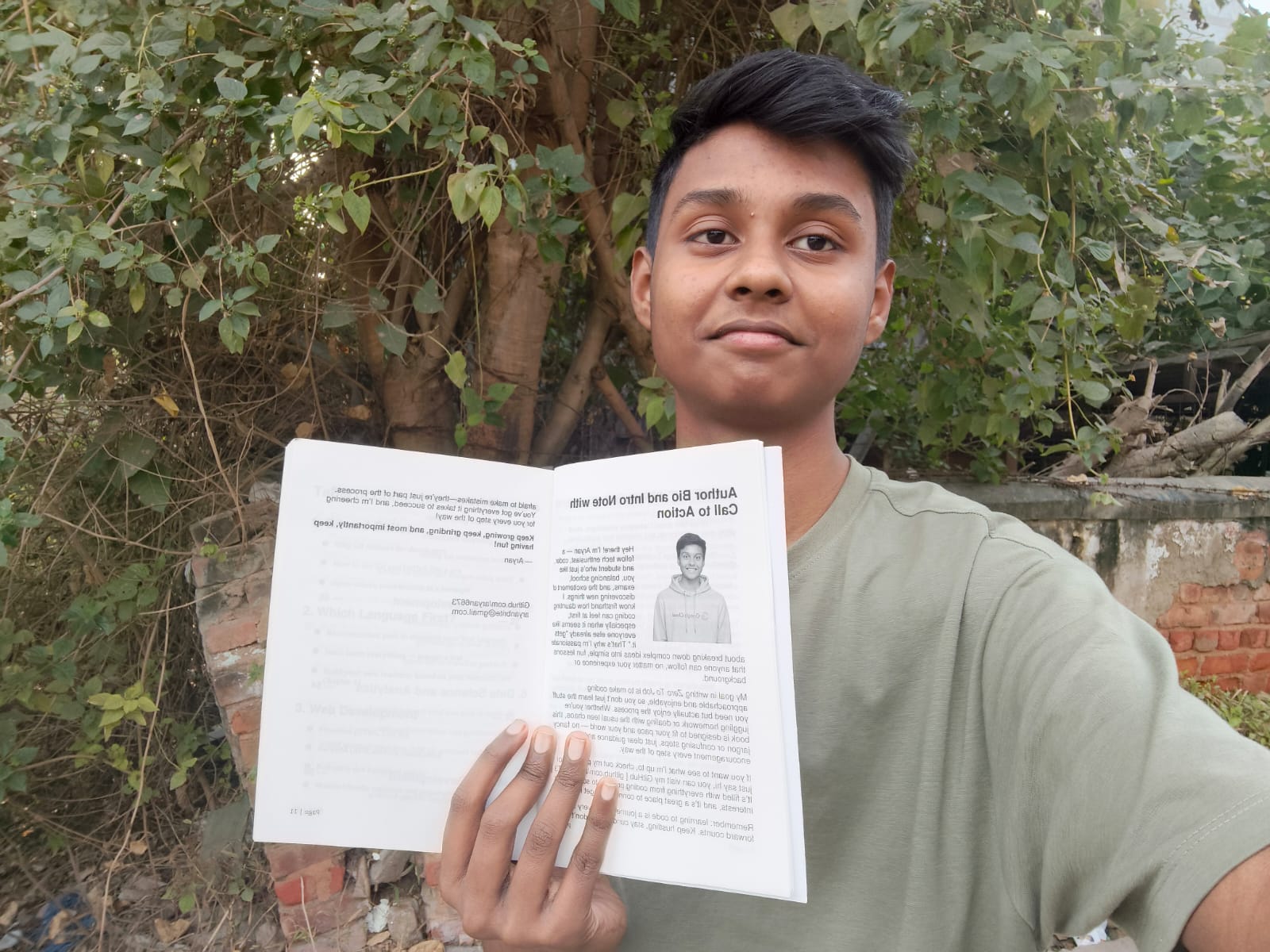
Me with My Book
Couldn’t skip this one.
Proud moment, no shame.
Who this book is for
- Students aged 13–18
- Teens confused about CS branches
- People who think “job = college ke baad”
- Anyone starting from absolute zero
Who this book is NOT for
- People looking for deep theory
- People who won’t take action
- People expecting shortcuts without effort
Final thoughts
This book isn’t perfect.
I’m not perfect.
And honestly, that’s the point.
I wrote the book I wish I had when I was starting out —
something simple, honest, and practical.
If this book helps even one teen start early and avoid confusion, it’s worth it.
Get the book here:
https://www.amazon.com/Zero-Job-job-without-waiting-college/dp/B0FRNSSM9Y
If you’re a teen reading this:
Start early. Experiment. Break stuff. Learn fast.
College can wait. Curiosity shouldn’t.
Recommended citation: Aryan Singh. (2025). "Guide for teens." Book. 1(1).
Download Paper | Download Slides